Romania's Medieval Fortresses, Documented

Ferrylane is an independent reference covering the stone citadels of medieval Romania — their construction history, defensive architecture, and the restoration efforts shaping how they reach the next century.

Recent Articles

Over 200 Medieval Fortresses Documented on Romanian Soil

Romania holds one of the densest concentrations of medieval defensive architecture in Europe. From Transylvania's Saxon ring-walls to Moldavian frontier citadels, each structure tells a distinct chapter of the region's history.

Explore Corvins' Castle

By the Numbers

7

UNESCO Sites in Romania

Romania's list of World Heritage Sites includes fortified churches, the Dacian Fortresses of the Orăștie Mountains, and the historic Sighișoara citadel.

14th c.

Peak of Fortress Construction

The 14th and 15th centuries saw the heaviest investment in stone fortifications across Transylvania, Wallachia, and Moldavia, driven by Ottoman pressure from the south.

150+

Active Restoration Projects

As of 2025, Romania's National Heritage Institute lists over 150 documented restoration and conservation interventions at medieval fortified sites across all regions.

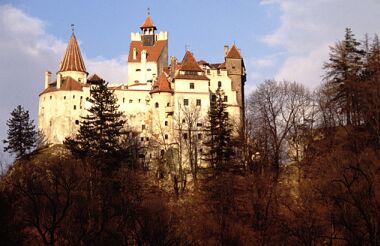
Peles Castle surrounded by autumn forest in Sinaia

Restoration and the Challenge of Continuity

Many Romanian fortresses face a shared dilemma: the techniques used to build them in the 14th and 15th centuries are no longer in common practice. Stone masons trained in lime-mortar work, traditional carpentry for drawbridge mechanisms, and period-accurate ironwork are in short supply.

The Romanian National Heritage Institute (INP) coordinates restoration programmes funded partly through EU structural funds and partly through municipal budgets. Bran Castle's 2009–2013 restoration, for example, addressed structural weaknesses in the northeastern tower while preserving original 13th-century stonework.

Read about Bran Castle →
The Neamț Fortress and Moldavia's Eastern Defense Line

Neamț Fortress, built in the 14th century and reinforced under Stephen the Great, guarded the eastern approaches to Moldavia. Its rectangular plan with projecting towers represents an earlier defensive model than the later bastion systems introduced from western Europe.

About This Archive

Contact & Correspondence

An Independent Cultural Reference

Ferrylane does not receive institutional funding. The content here is assembled from primary historical sources, field documentation, and published scholarship on Romanian medieval history.

About the Archive